Richard Malone Wants to Know Who Made Your Clothes
By Christina DonoghueThe glass and steel of the Council of the European Union’s Justus Lipsius building seem an unlikely home for a hand-stitched monument to lost history. For artist and designer Richard Malone, that’s the entire point.
As someone who spent the first ten years of their career in fashion, Richard Malone knows who makes their clothes, and yet, for many in the industry of consumption, such knowledge is a radical act, even in 2026. ‘I think fabric is this unifying thing in Europe that is still massively overlooked in terms of importance’, they tell me. It’s this belief that underpins the artist’s latest body of work, cuimhne agus séadchomhartha (memory and monument), currently on view in the Council of the European Union in Brussels to celebrate the artist’s native country, Ireland, and its honorary presidency of the EU, a position that runs until December 2026. ‘I had to make a speech here with the secretary general to commemorate the commission when it opened. I was saying how contradictory it is that clothing dominates so much of the conversation, yet we know so little about it. I asked everyone in the room, “Who made your clothes?” Nobody knew. We’re all just participating in this game of not asking questions about textiles and fibre, which is shocking because our entire existence depends on it.’
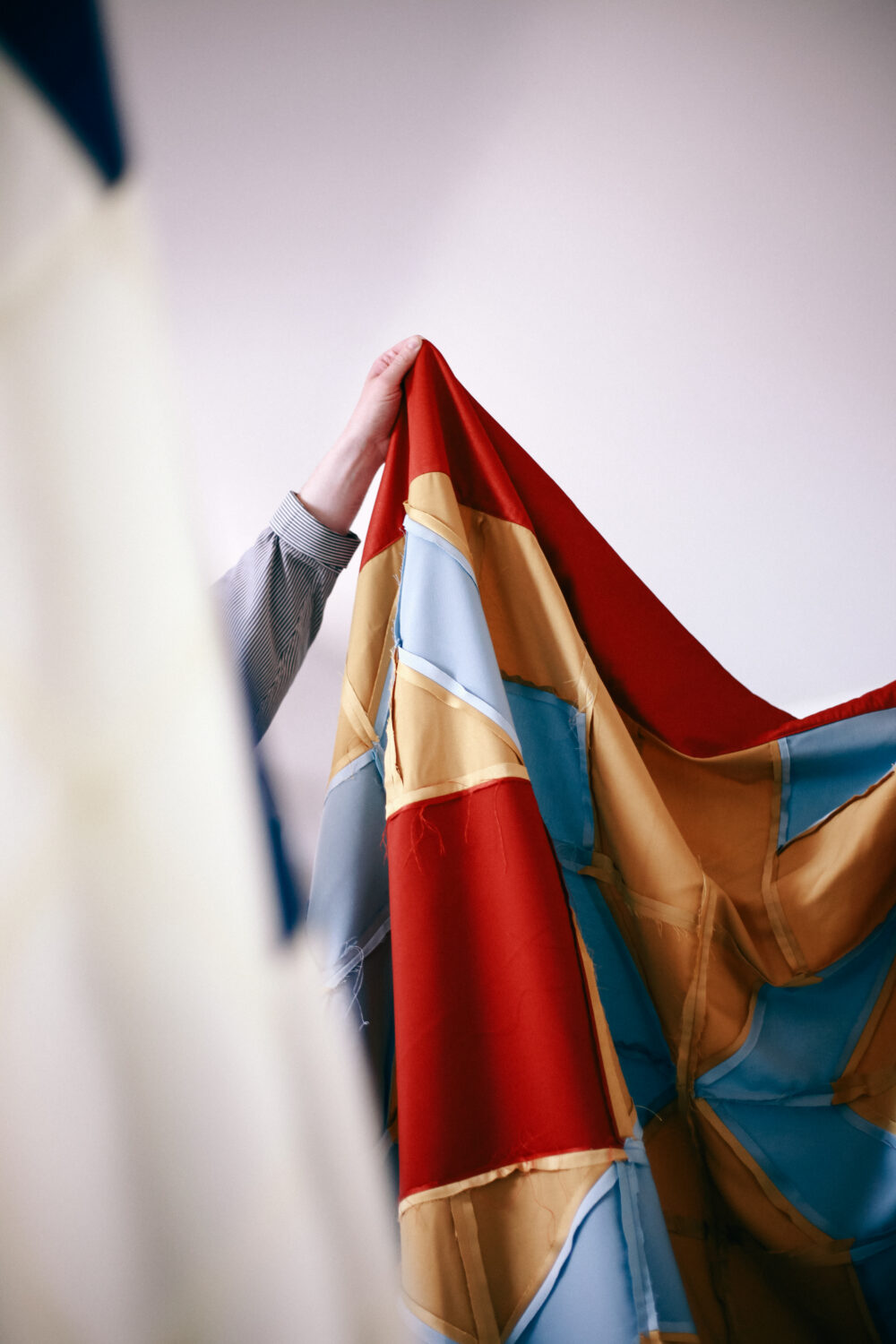
The pertinence of Malone’s question, and the audience’s lack of answer, indicates a widening chasm between those afforded the power of decision-making and those whose lives are shaped immeasurably by choices in which they have no say. Choices that are often made in the very building Malone’s work currently stands in. It’s this separation that provides the backbone behind cuimhne agus séadchomhartha, a rather seismic, dramatically draped installation that relies on Malone’s use of Irish Chain and Triple Chain quilts to reference their native country’s shared histories of migration, identity and labour. ‘They’re considered very precious because they’re the things people brought with them when they travelled across the Atlantic’, Malone comments. ‘Time and time again, they have shown up at different points of migration where people have left Ireland either because of the famine or to migrate to America. They’re held in museum collections across the world as a way to trace Irish migration, but in many instances, we don’t know who made them.’ Rather than lie flat, each quilt, all of which were created specifically for the work, is manipulated to represent a temporal structure nodding to the moving medieval markets that inform its design, having been chosen by Malone for their prominence as places historically associated with community and cultural exchange. It’s in this vein that the work asks its most profound question of all, connecting to Malone’s original point put to members of the European Council. Why is some knowledge afforded the privilege of preservation while other equally rich, intricate and revealing histories are left out of the storybook altogether?
‘As I said, there’s a history of labour in terms of wrapping and tying all of the different processes that are involved in fabric, and these quilts make up such a large portion of that history where Ireland is concerned’, Malone says, before noting: ‘There’s even one in The Met, and yet we still don’t know that skill. There are these cut-off points in our collective memory. We may know how to do it, but we don’t know who, and that’s such a strange history to overlook; it’s a really interesting type of erasure that constantly happens.’ It’s an erasure with a long, muddied history, favouring anyone who wasn’t of divine importance in the eyes of the law. It’s true that the hands that stitched these quilts belonged, for the most part, to women, but they are far from alone as history’s gaps stretch far and wide where labour over power is concerned. Malone is more critical of this than most.
‘I was on a residency in Rome earlier this year, and I remember asking the academics, “Who built Rome?” They can tell you about the emperor and the patrons, but they can’t tell you who laid the bricks and who built the walls… It was fascinating for me to speak to academics during this process and realise their research only goes back that far’, Malone tells me, before diving into a very different yet closely related example of why some histories are deemed more precious than others. ‘I think a lot about when they found the Egyptian mummies. All of the bodies were wrapped in these extraordinary linen quilts. Then men who discovered the tombs cut right through them to get to the gold, automatically revealing which material was deemed more worthy. I can’t help but think, if you had a working woman from that time or a labourer who works with textiles, weaving or setting up looms, there’s no way you would’ve cut through such delicately embroidered linens, not when you’ve seen the work in it.’ It’s a disparity that’s reflected even in the very cultural institutions designed to preserve overlooked history. ‘If people paid closer attention to what museums collect, it would become more apparent, and so I am trying to make a work that says that without signage. It’s more of an invitation for people to think: “Why am I not trying to look deeper and understand what something is or where it comes from?”’
They ask a similar question of the fetishisation of Ireland today, prompted by my asking for their thoughts on the country’s somewhat renaissance in the minds of its British and European counterparts. ‘I think it’s very odd’, they tell me. ‘It’s odd because it’s very Americanised, particularly when it comes down to a funding level. Film, music and TV are all over it; you can’t swing a cat at the Oscars without an Irish actor being nominated’, they laugh, before clarifying, ‘which is great. I really do think that’s amazing. But it doesn’t come with a genuine desire to understand Irish history and culture; that’s where it falls short’. We move towards recounting the country’s only very recent history of homosexuality and the changing tide of a woman’s right to abortion, legalised on 1 January 2019. ‘There’s a real cultural reckoning of what Irish identity is supposed to be. In my mind, it’s something that should always be expanded upon. Like, even when I was born in Ireland, homosexuality was illegal. That is really recent living history. There’s no way I would have been selected to do this work 30 years ago, so it’s such a strange period of time. We’ve had massive political change, and I felt obligated to reflect that in the work. “How do I make the material language of Irish art catch up with what’s happened?”’
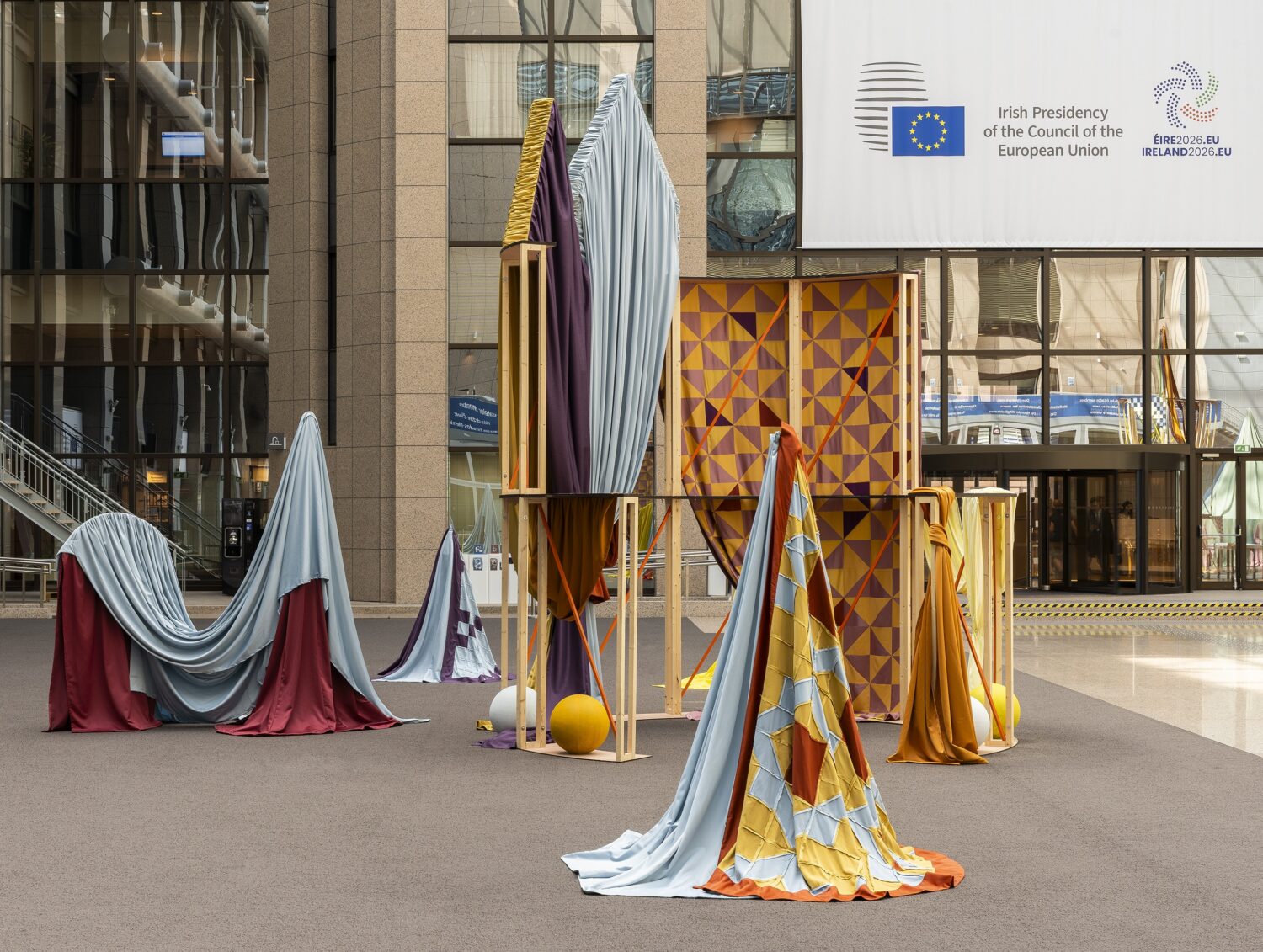
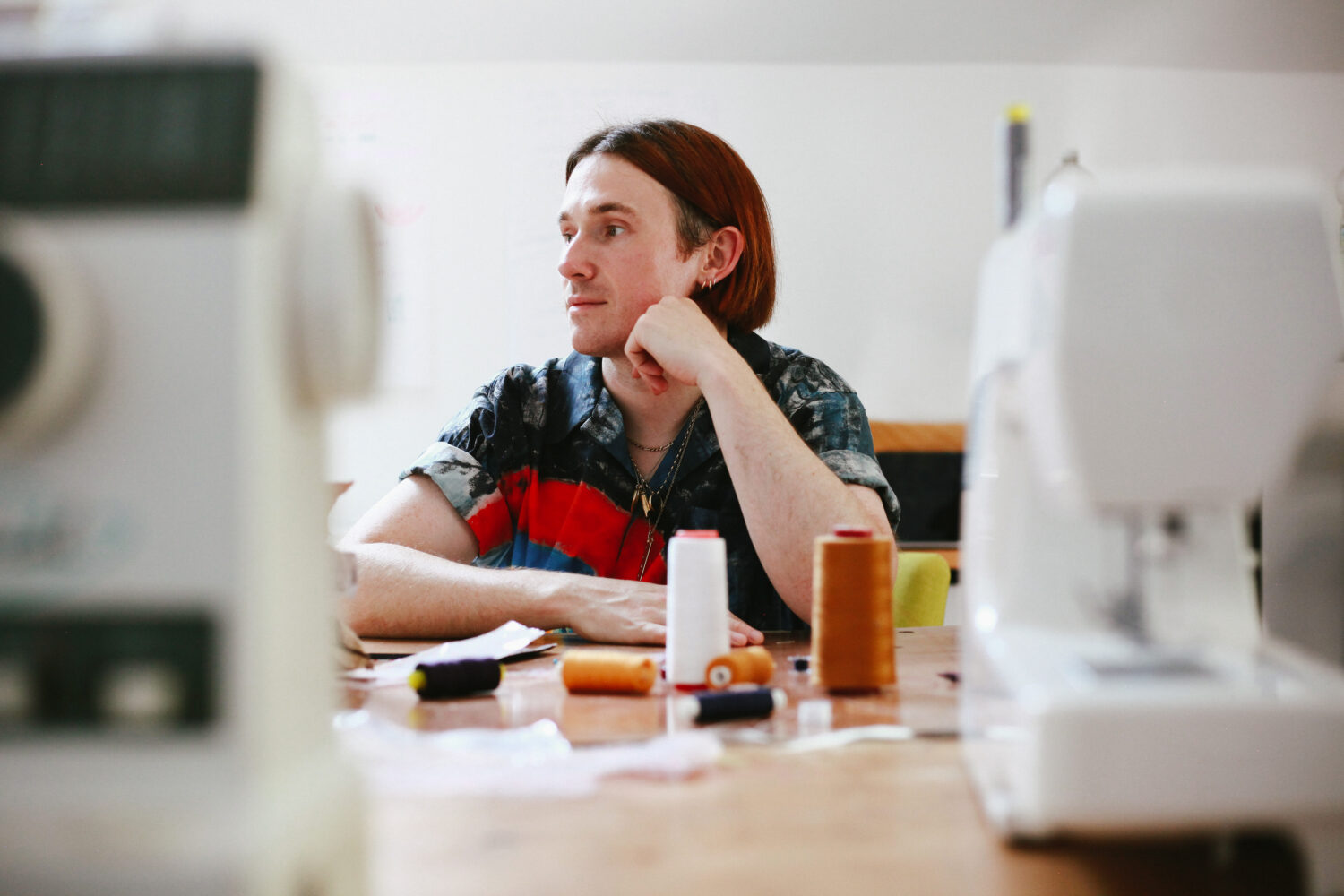
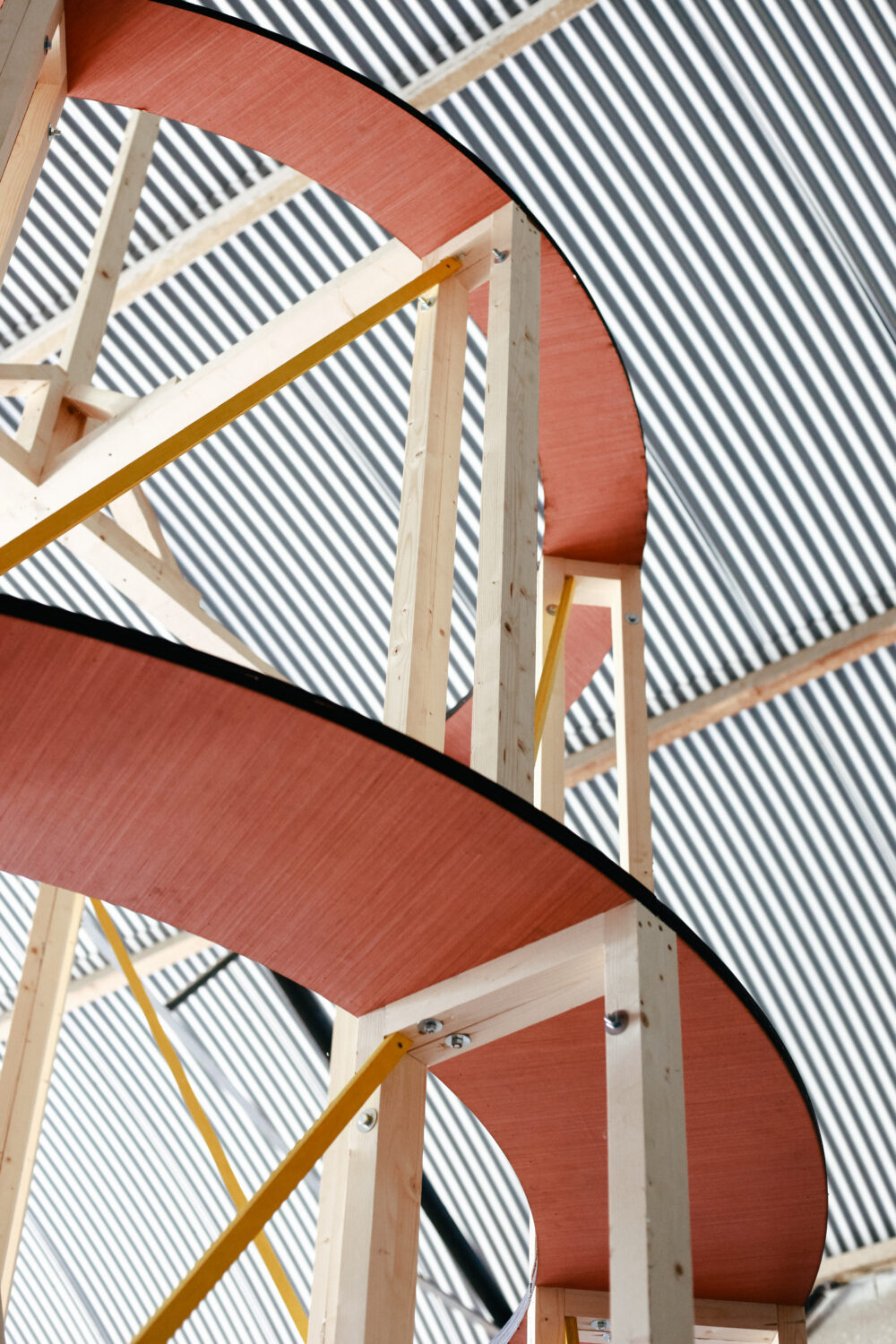
The answer begins with the building itself. Responding to a space as formulaic and didactic as the Council of the European Union isn’t new for Malone, who previously choreographed a performance for Hayward’s Dear Climate: Art and Hope in a Time of Crisis and filled the centre of the Royal Academy’s Summer Exhibition. ‘This building is so weird, didactic, harsh, powerful and protective, even,’ they tell me. ‘My main interest was the challenge of “How do you put something in here that’s fragile and has a kind of historical reference but is also overlooked as modern?”’ Part of their answer lies in their collaborators: We Make Good, a Dublin-based social enterprise that employs refugees and people from the criminal justice system. ‘They’re amazing,’ Malone says. ‘I’ve wanted to work with them for ages, but you need a guarantee of work because that’s how they reach out and hire people. I could only approach them once I won the bid for this commission, and because the project came with loads of stitch work, it was perfect.’ Malone’s choice to work with the group is pointed, an extension of their desire to provoke and challenge what Irish identity means in 2026.
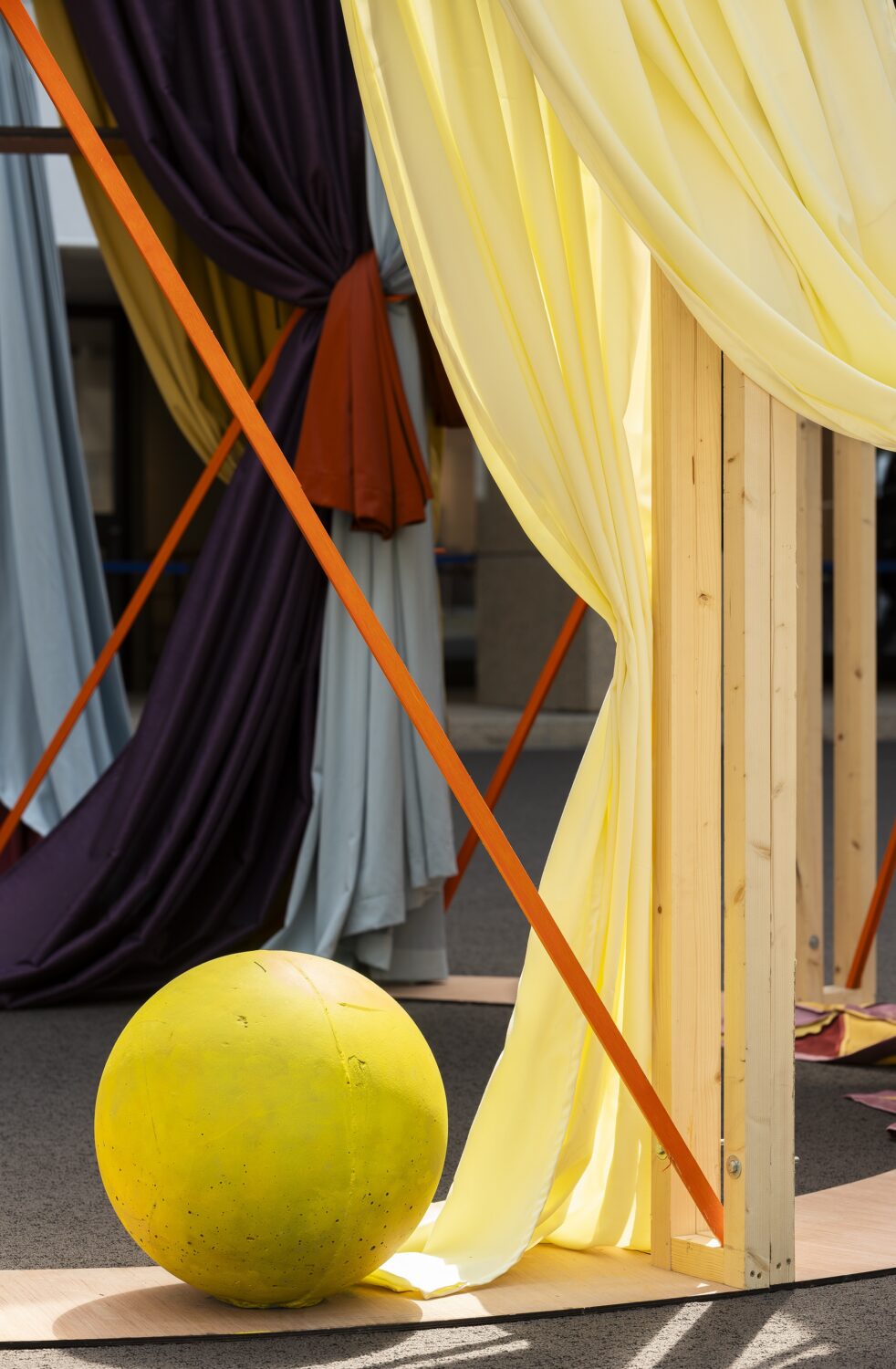
Where the Irish Chain tradition so often left its makers unrecorded, here the quilters were named aloud in Malone’s speech at the opening, a symbol of change in itself. If Irish identity is, as Malone insists, something that should always be expanded upon, then this is expansion in practice. ‘With Culture Ireland, I was fed up looking into the history of the building commissions being just about one type of person,’ they tell me. ‘I don’t think they’ve ever represented the political changes that have happened… It’s an opportunity to understand those really hard-won democratic changes in Ireland and how they have an effect in Europe.’ It feels rather ironic that, for a building built to decide the future, the past has so often been left out of the picture. Malone’s installation flips that narrative on its head, allowing Malone to weave a new history of their own.
Feature image: Richard Malone by Donal Talbot